

Oysters New Zealand
Oyster farming in New Zealand began in the early 1960s with the cultivation of the native rock oyster (Saccostrea commercialis) on the North Island, initially using cement-coated sticks laid in wooden racks in the lower intertidal zone However, this effort was not financially successful due to long growing times of three to four years, high fouling, and inconsistent spat settlement The industry was transformed in the 1970s with the accidental introduction of the Pacific oyster (Crassostrea gigas), likely via shipping mechanisms such as ballast water or hull fouling This non-indigenous species grew three times faster than the native rock oyster, produced more consistent spat, and had a well-established international market, leading to its rapid adoption by farmers By the mid-1970s, Pacific oysters had become the dominant species in New Zealand's oyster farming industry
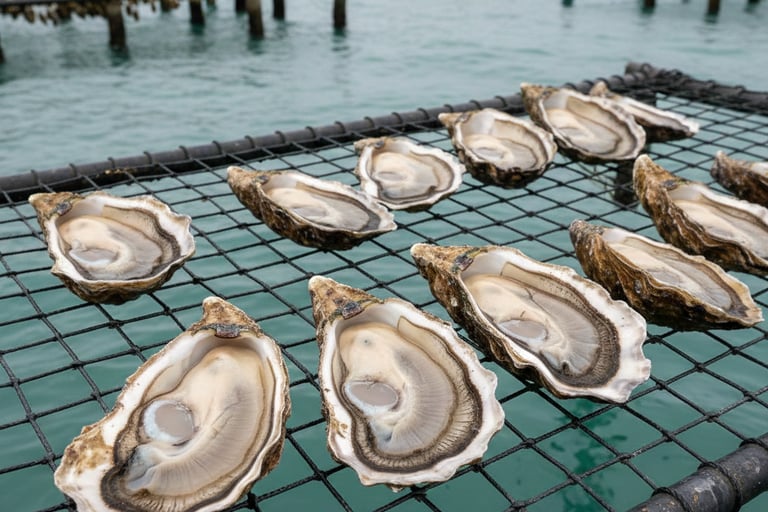
The primary farming method for Pacific oysters has traditionally been the intertidal rack system, where spat is collected on wooden sticks and attached to wooden racks anchored in the lower intertidal zone The majority of farms are located in sheltered bays and harbours of the North Island, including Whangaroa, Mahurangi, Kaipara, Coromandel, and the Bay of Islands Historically, spat supply relied heavily on wild-caught spat, mainly gathered from Kaipara Harbour However, there is a growing shift towards using hatchery-produced single-seed spat, with the Cawthron Institute being a key provider of selectively bred spat This shift supports the adoption of alternative grow-out systems such as plastic trays and subtidal longline systems, including the Australian-designed BST system, which allows for greater control over oyster growth and mechanisation
As of 2006, there were over 230 oyster farms covering more than 900 hectares, with an annual value of approximately $32 million, of which about $18 million was from exports The industry continues to expand, with some large ventures covering tens of hectares and producing an estimated 4,000 tonnes annually While the Pacific oyster is now the main farmed species, the native Bluff oyster (Ostrea chilensis) has never been farmed and is still harvested from the wild Oyster farming in New Zealand is considered environmentally sustainable, imposing a small burden on the local ecosystem and providing habitat for some marine species when the tide is in The industry remains a significant part of New Zealand's aquaculture sector, with ongoing development focused on improving efficiency and sustainability
Although FishFarmSolutions.com does not endorse third-party services, all links are reviewed for relevance and operational status. Verified listings meet our basic criteria for transparency and contactability.